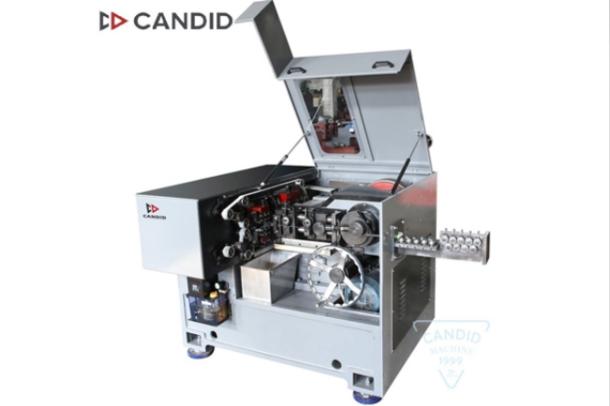
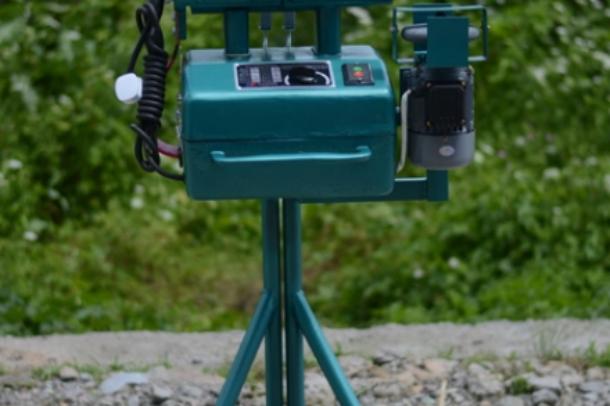
If you are planning to start a nail manufacturing business, one of the first questions you may have is: how does an automatic nail making machine actually work?
Understanding the working process is important not only for beginners but also for factory owners who want to improve production efficiency, reduce labor costs, and increase production capacity. Today, modern nail making machines can produce hundreds or even thousands of nails per minute, making them an essential piece of equipment in the fastener manufacturing industry.
In this article, we will explain the core components of an automatic nail making machine, the complete nail production process, and how modern technology is improving efficiency and product quality.
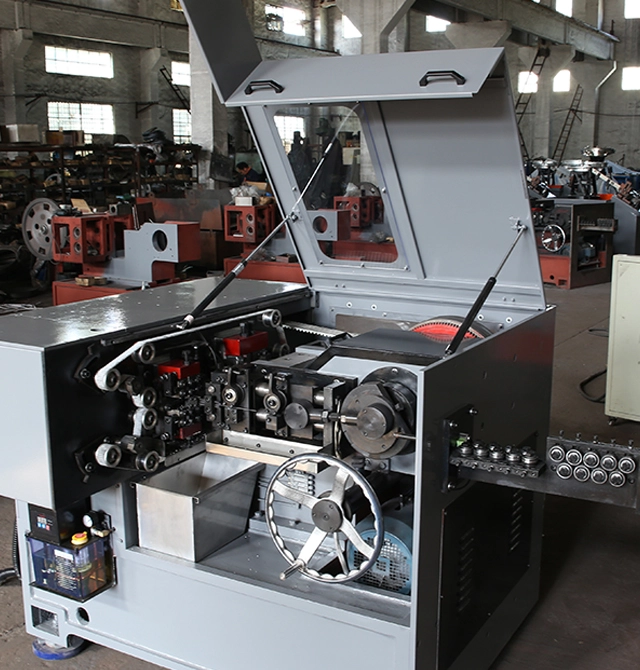
A standard wire nail making machine (such as the widely used Z94-C series) operates through a precise mechanical process. Although the structure may look simple, several key components must work together perfectly.
The process begins with a steel wire coil placed on a pay-off reel. The wire is then pulled through a set of straightening rollers to remove bends and ensure a smooth and stable feed into the machine. Stable wire feeding is extremely important because any deviation can affect nail length and production speed.
Once the wire enters the machine, two high-strength gripping dies clamp the wire firmly in place. Only a small portion of the wire remains exposed at the front, which will be used to form the nail head. The quality of the gripping dies directly affects production accuracy and machine durability.
After the wire is clamped, the heading punch strikes the exposed wire with strong mechanical force. This action forms the head of the nail in a fraction of a second. Depending on the mold design, the machine can produce different types of nail heads, including flat heads, checkered heads, and roofing nail heads.
After the nail head is formed, the wire moves forward to the required length. Two cutting blades then strike the wire simultaneously. These blades not only cut the nail from the wire but also shape the sharp nail point at the same time. This ensures consistent nail length and uniform quality during high-speed production.
Although the nail making machine performs the core forming process, a complete nail production line usually includes several stages.
If the steel wire diameter is too large, it must first pass through a wire drawing machine. This process reduces the wire diameter to match the required nail size and ensures better forming quality.
The wire enters the automatic nail making machine, where the feeding, clamping, heading, and cutting processes take place. Depending on the machine model, production speed can range from 200 nails per minute to over 1,000 nails per minute.
After forming, the nails usually contain oil residue and small burrs. They are placed in a nail polishing drum, where materials such as sawdust or crushed corn cobs are used to clean the surface and improve the appearance of the nails.
For products such as roofing nails, screw nails, or ring-shank nails, the nails are sent to a thread rolling machine. This process adds threads to the nail shank, improving holding strength in construction applications.
For outdoor or construction use, nails are often galvanized to prevent rust and corrosion. Both electro-galvanizing and hot-dip galvanizing are commonly used in the nail manufacturing industry.
Finally, the finished nails are either packed as bulk nails or transferred to a coil nail making machine for automatic collating. These collated nails are widely used in pneumatic nail guns in construction and pallet manufacturing.
Automatic nail making machines are widely used in many industrial sectors, including:
Construction nail production
Pallet nail manufacturing
Roofing nail production
Industrial fastener manufacturing
Hardware and building material factories
Because of their high efficiency and stable production quality, these machines have become one of the most important pieces of equipment in modern fastener manufacturing.
Compared with traditional machines, modern automatic nail making machines offer several important advantages:
Higher production speed
Lower labor costs
More stable product quality
Reduced material waste
Easier operation through PLC control systems
With continuous improvements in automation technology, nail manufacturers can now achieve higher output while maintaining consistent quality and lower operating costs.
An automatic nail making machine works through a precise and efficient mechanical process that includes wire feeding, head forming, cutting, and polishing. Combined with supporting equipment such as wire drawing machines and polishing drums, it forms a complete nail production line.
Understanding how a nail making machine works can help factory owners, investors, and engineers choose the right equipment based on production capacity, nail size requirements, and budget. As global demand for construction materials continues to grow, automatic nail making machines will continue to play a key role in the fastener manufacturing industry.
 English