Nail making machines generally offer faster return on investment, lower technical barriers, and stable high-volume demand, making them more profitable for most small and medium manufacturers. Screw making machines, while capable of higher margins, require more complex production processes, higher capital investment, and stricter quality control, which makes profitability more dependent on technical capability and market positioning.
The difference lies in production complexity, value chain length, and product application.
Nail production focuses on wire forming, cutting, and finishing
Screw production involves forming, threading, heat treatment, and often surface coating
A steel wire nail making machine performs high-speed, continuous production with relatively simple mechanical processes. Screw manufacturing, by contrast, requires multi-stage machinery and higher precision engineering.
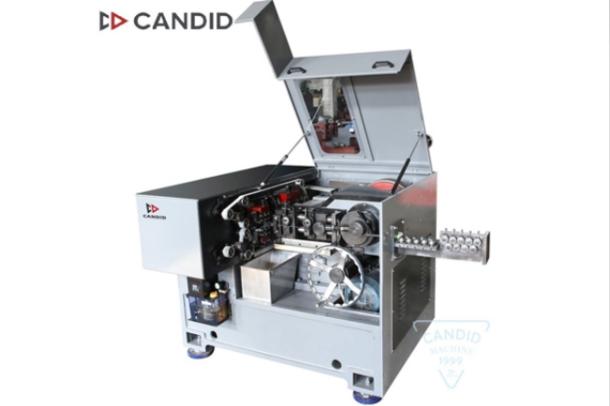
A nail making machine for sale typically includes automated systems for wire feeding, cutting, and forming.
Wire feeding from coil
Straightening and cutting
Nail head forming
Point shaping
Optional polishing and galvanizing
High-speed continuous production
Low material waste
Simple machine structure
Easy operation and maintenance
A reliable nail making machine manufacturer will usually offer machines capable of producing thousands of nails per minute, depending on model and wire diameter.
Screw production is more complex and involves multiple machines.
Wire drawing
Cold heading (forming screw head)
Thread rolling
Heat treatment (hardening)
Surface treatment (plating or coating)
Multi-stage production line
Higher precision requirements
Strong dependence on tooling quality
Greater technical expertise required
Compared to a steel wire nail making machine, screw production involves significantly more process steps and equipment.
Extremely high output per minute
Continuous operation
Lower downtime
Minimal operator intervention
Slower per-stage production
Multiple process bottlenecks
Higher setup time
Greater reliance on skilled operators
From a pure throughput perspective, a nail making machine for sale delivers much higher production efficiency.
Profitability depends on investment level, product positioning, and operational capability.
Lower machine investment
Lower labor cost
High-volume commodity product
Stable demand in construction and packaging
Profit advantage: fast turnover + low risk
Higher equipment and tooling cost
Higher technical requirements
Greater product differentiation
Higher unit selling price
Profit advantage: higher margins per unit
A nail production line is significantly more accessible.
Single or limited machine setup
Lower tooling cost
Faster installation and commissioning
Working with a trusted nail making machine supplier allows new investors to start production quickly with manageable capital.
Multiple machines required (heading, threading, heat treatment)
Higher tooling and maintenance cost
Larger factory space needed
For new manufacturers, the capital barrier is much higher.
Low-carbon steel wire
Optional galvanized wire
Carbon steel wire
Alloy steel (for high-strength screws)
Stainless steel
Material requirements for screws are stricter, especially when mechanical performance is critical.
Simple mechanical structure
Lower maintenance complexity
Easier operator training
Quick troubleshooting
A high-quality steel wire nail making machine is designed for stable, long-term operation with minimal downtime.
Complex tooling setup
Higher maintenance requirements
Frequent adjustments for precision
Skilled labor required
Operational difficulty is a key factor when evaluating long-term profitability.
Construction industry
Packaging
Woodworking
Furniture manufacturing
Demand is large, stable, and less sensitive to customization.
Construction and infrastructure
Automotive and machinery
Electronics and appliances
The screw market is more segmented and often requires specific standards and certifications.
For new entrants, nail production is the more practical choice.
Lower investment risk
Faster ROI cycle
Easier operation
Stable product demand
Many buyers searching for a nail making machine for sale are first-time investors entering the metal wire product industry.
Screw production becomes more attractive when:
You have technical expertise and skilled workforce
You target high-value industrial markets
You can invest in complete production lines
You aim for product differentiation rather than volume
Selecting the right partner is critical for long-term profitability.
A reliable nail making machine manufacturer should provide:
Stable machine performance
High production efficiency
Spare parts availability
Technical support and training
Customization options
Working with an experienced nail making machine supplier reduces operational risk and ensures consistent output quality.
A nail making machine is the more profitable option for most manufacturers due to its low investment, high production speed, and stable market demand. It is especially suitable for startups and businesses focused on volume production.
Screw making machines offer higher margins but require greater capital, technical expertise, and operational control, making them more suitable for established manufacturers with advanced capabilities.
For investors seeking a balance of risk, scalability, and return, starting with a steel wire nail making machine is often the most efficient path to building a sustainable manufacturing business.
The cost varies depending on capacity and automation level, but a standard nail making machine for sale is generally more affordable than a full screw production line.
Yes, nail manufacturing is profitable due to high demand, fast production speed, and relatively low operating costs.
Nails require simpler forming processes, while screws involve threading, heat treatment, and more complex production steps.
A steel wire nail making machine is easier to operate and maintain compared to screw making equipment.
Choose an experienced nail making machine manufacturer that offers technical support, spare parts, and proven machine performance.
 English