A paper clip making machine and a staple pin making machine are designed for different products, different forming methods, and different production goals. If your business targets office binding products with simple wire forming, a clip making machine is the better fit. If you want to produce high-volume fastening products for stationery, packaging, or industrial use, a staple pin making machine is usually the more profitable option. The right choice depends on wire specification, product shape, production speed, and your end market.
The main difference is the finished product structure and forming process.
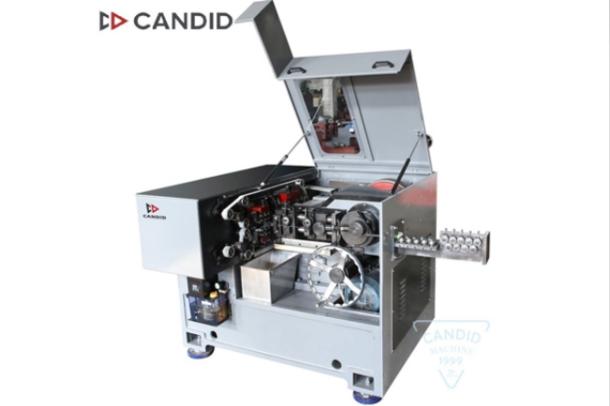
A clip making machine bends metal wire into looped or shaped clips, most commonly paper clips. The machine focuses on wire feeding, straightening, bending, and cutting in a continuous sequence. Product geometry is relatively simple, but dimensional consistency and forming stability are critical at high speed.
A staple pin making machine, by contrast, is built to produce staples with precise leg length, crown width, and strip assembly. In many cases, the process includes wire flattening, forming, cutting, and bonding into staple strips. Compared with a clip manufacturing machine, staple production involves tighter requirements on strip uniformity and downstream packaging compatibility.
A clip making machine typically processes round metal wire through several coordinated steps:
The wire is fed from a coil and straightened to eliminate curvature before entering the forming section. Stable wire tension is essential to prevent inconsistent clip size.
The machine bends the wire into the required paper clip profile. Tool precision directly affects shape consistency, edge smoothness, and product appearance.
Once the target shape is formed, the wire is cut and discharged automatically. In high-speed operation, synchronization between bending and cutting is the most important factor for output stability.
A modern clip manufacturing machine is valued for its compact structure, easy operation, and efficient output in standard office stationery production.
Staple pin production is more process-intensive than clip production because the product itself is more standardized and function-sensitive.
Depending on the staple type, wire may need to be flattened before forming. This is a key difference from many paper clip systems.
The machine forms the staple shape with a crown and two legs, then cuts each unit with tight dimensional tolerance.
For many staple products, individual pins are assembled into strips using adhesive or bonding technology, allowing them to be loaded into staplers efficiently.
This means a staple pin machine is often better suited for factories aiming at large-volume, highly standardized consumable production.
That depends on the product line you want to build.
A clip making machine is ideal for:
Standard paper clips
Decorative clips
Specialty wire office clips
Smaller product catalogs with simpler forming structures
A staple pin making machine is ideal for:
Stapler consumables
Office staples in standard sizes
Packaging staples
Industrial fastening staples
If your focus is on flexible, low-complexity wire products, a clip manufacturing machine offers a simpler production route. If your goal is repeat-volume consumables with stronger reorder demand, staple pin production usually has greater long-term scale potential.
In most factories, staple pin making machines achieve higher effective production throughput because staple products are standardized and often produced in very large volumes. However, output should not be judged by speed alone.
A clip making machine may have lower structural complexity and faster setup for model changes, which is valuable if you produce different clip sizes or shapes. Staple production lines, on the other hand, often run with stronger efficiency when manufacturing one standard size continuously.
From an operational perspective:
Faster product changeover
Lower tooling complexity
Suitable for small and medium batch production
Easier maintenance in basic wire forming applications
Better for large-scale continuous production
Higher standardization
Stronger repeat-order potential
More efficient for commodity stationery lines
Both machines generally use metal wire, but material specifications differ based on product requirements.
A clip making machine usually uses round wire with stable elasticity and surface finish. Paper clips need consistent spring behavior and a clean appearance, especially for export-grade products.
A staple pin making machine may use wire that requires additional flattening or precise shaping. Since staples must penetrate paper or packaging materials cleanly, wire hardness, coating, and forming precision are more critical.
For both machine types, raw material consistency directly affects:
Tool wear
Product accuracy
Scrap rate
Production speed
This is why buyers should evaluate not only the machine itself but also whether it matches their locally available wire grades.
A clip making machine is generally easier to operate, especially for manufacturers entering the stationery machinery market for the first time. The forming structure is simpler, and the adjustment logic is more straightforward.
A staple pin making machine usually requires more attention to:
Forming tolerance
Strip bonding quality
Wire flattening consistency
Alignment during continuous high-speed operation
For factories with limited technical staff, a clip manufacturing machine often offers a smoother startup curve and lower training cost.
Paper clips and staple pins serve different purchasing behaviors.
Paper clips are basic office products with stable demand, but product differentiation is possible through:
Color coating
Shape variation
Decorative design
Retail packaging
Staple pins are more standardized, but they often benefit from higher repeat consumption, especially in offices, schools, logistics, and packaging environments. For this reason, staple pin manufacturing may offer stronger recurring order volume.
In practical terms:
Choose clips if you want product flexibility and simpler production
Choose staples if you want repeat-demand consumables and larger-scale output
Before investing, buyers should compare these factors carefully:
If you only plan to produce standard office clips, a clip making machine is sufficient. If you want consumables for staplers or industrial fastening applications, staple equipment is more suitable.
Evaluate daily and monthly output requirements. A clip manufacturing machine is efficient for common clip models, but staple production may be better for very high-volume standardized lines.
Clip machines are usually easier to switch between certain shapes or sizes. Staple machines are often optimized for stable mass production of one type.
Clip production is often easier for smaller factories. Staple production may require stronger technical supervision and quality control.
Staple pins usually require strip assembly and packaging compatibility. Paper clips are simpler in this regard.
Profitability depends less on the machine category itself and more on market demand, product positioning, and production control.
A clip making machine can be highly profitable when:
You supply customized or retail-friendly clip products
You want lower startup complexity
You operate in a market with steady office stationery demand
A staple pin making machine can be more profitable when:
You target high-volume staple consumption
You serve wholesalers or office supply distributors
You run long production cycles with minimal model switching
For many new investors, a clip manufacturing machine offers an easier market entry. For larger factories aiming at scale, staple pin production may provide stronger long-term output value.
A clip making machine is the better option for manufacturers seeking simpler wire forming, flexible product styles, and lower operational complexity. A staple pin making machine is the stronger choice for factories focused on standardized consumables, larger production volume, and repeat-order business.
The best decision comes from matching the machine to your product strategy rather than comparing speed alone. If your market favors basic office clips or shaped wire stationery, invest in a reliable clip manufacturing machine. If your business model depends on high-volume staple demand, staple pin equipment will usually deliver better scale efficiency.
A clip making machine is used to straighten, bend, cut, and form metal wire into paper clips or similar wire stationery products.
A staple pin making machine is used to form staple shapes from metal wire, and in many cases, to assemble them into strips for stapler use.
Yes, in most cases a clip making machine is easier to operate because the forming process is simpler and product structure is less complex.
Staple pins generally have higher repeat demand because they are consumable fastening products used in large quantities.
Usually no. Although both use wire as raw material, the forming structure, tooling, and downstream handling requirements are different.
 English