In wire mesh manufacturing, edge quality is one of the most critical factors affecting product usability, safety, and downstream processing. Rough edges, sharp protrusions, and metal burrs not only reduce product quality but also increase handling risks and rejection rates.
This is why wire mesh trimming plays a vital role after welding, weaving, or cutting operations. A dedicated wire mesh trimming machine is designed to remove excess wire ends and burrs, ensuring smooth edge trimming and consistent final dimensions.
But how does a wire mesh trimming machine actually work? And how does it achieve burr-free cutting across different mesh types?
This article explains the trimming process step by step, focusing on machine structure, cutting principles, and precision tooling—helping manufacturers understand how modern mesh trimmers deliver clean, safe, and uniform edges.
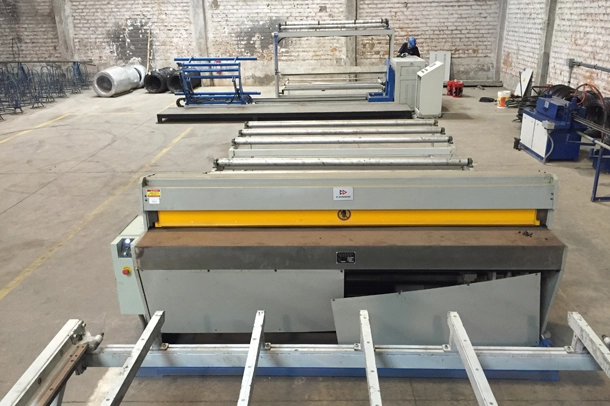
Wire mesh trimming is the process of removing uneven wire ends, protrusions, or excess material from the edges of welded or woven wire mesh sheets. This operation is typically performed after mesh forming but before packaging or surface treatment.
Without proper trimming, wire mesh products may suffer from:
Sharp edges that pose safety hazards
Inconsistent sheet dimensions
Poor appearance and reduced commercial value
Difficulties in stacking, handling, or further processing
A specialized wire mesh trimming machine ensures that each mesh panel meets dimensional tolerances while maintaining clean and smooth edges.
To understand how a mesh trimmer works, it is important to look at the trimming process as a combination of controlled feeding, precision cutting, and synchronized motion.
The process begins with precise positioning of the wire mesh sheet. The mesh is guided into the trimming zone using rollers, conveyors, or clamping mechanisms to ensure consistent alignment.
Proper alignment is essential because uneven feeding can lead to irregular cuts or residual burrs. High-quality trimming machines are designed to maintain stable mesh positioning throughout the cutting process.
At the core of smooth edge trimming is the cutting system. Unlike rough shearing or manual cutting, a wire mesh trimming machine uses precision-engineered blades designed specifically for mesh structures.
These blades:
Apply uniform cutting force across multiple wire intersections
Cut wires cleanly instead of tearing them
Minimize deformation at the cut point
By maintaining controlled blade clearance and cutting angles, the machine achieves consistent burr-free cutting, even on thicker or high-tensile wire mesh.
One key reason trimming machines produce smoother edges than manual methods is the cutting principle itself. Instead of snapping or bending wire ends, the machine performs controlled shearing.
This approach:
Prevents metal tearing
Reduces micro-fractures at wire ends
Produces flat, clean cut surfaces
Controlled shearing is especially important when working with welded wire mesh, where residual stress at weld points can otherwise cause uneven edges.
Smooth edges are largely determined by blade geometry. Trimming blades are engineered with optimized angles and hardness to suit different wire diameters and materials.
Proper tool geometry ensures:
Minimal burr formation
Reduced cutting resistance
Longer blade service life
This is a critical factor in achieving reliable smooth edge trimming in high-volume production environments.
Machine rigidity plays an equally important role. A stable frame and precise guiding system prevent vibration during cutting, which can otherwise create irregular edges or incomplete cuts.
Industrial-grade wire mesh trimming machines are designed with reinforced structures to maintain cutting accuracy over long production cycles.
Edge quality also depends on timing. The feeding speed of the mesh must be precisely synchronized with blade movement.
When feeding and cutting are properly coordinated:
Each wire end is cut at the optimal moment
Cutting force remains consistent
Edge uniformity is maintained across the entire mesh panel
This synchronization is a defining feature of automated mesh trimming systems.
Burrs are small, unwanted metal protrusions that appear at cut edges. In wire mesh processing, burrs often result from:
Dull or poorly aligned blades
Excessive cutting force
Improper cutting angles
Unstable machine operation
Burrs are not just cosmetic defects—they can cause injuries, interfere with coating processes, and lead to customer complaints.
A modern wire mesh trimming machine addresses burr formation through multiple design elements:
Sharp, wear-resistant cutting tools that slice cleanly through wires
Consistent blade clearance to avoid tearing
Controlled cutting speed to prevent overheating and deformation
Rigid machine construction to eliminate vibration
Together, these features enable reliable burr-free cutting, even in continuous industrial operation.
Wire mesh trimming machines are used for various mesh products, including:
Welded wire mesh panels
Construction reinforcement mesh
Fence mesh sheets
Industrial and architectural mesh
Each mesh type presents different challenges in terms of wire diameter, spacing, and material strength. A properly designed trimming machine can be adjusted or configured to accommodate these variations while maintaining edge quality.
Manual trimming methods are still used in some facilities, but they come with significant drawbacks:
Inconsistent edge quality
Higher labor costs
Increased safety risks
Lower production efficiency
Automated wire mesh trimming ensures:
Repeatable edge precision
Higher throughput
Improved workplace safety
Better overall product consistency
For manufacturers aiming to improve quality control and production efficiency, automated trimming is a logical upgrade.
When selecting an automatic wire mesh trimming machine, buyers should consider key factors such as:
Blade quality and replaceability
Cutting accuracy and consistency
Machine rigidity and build quality
Compatibility with mesh specifications
Ease of operation and maintenance
A well-designed machine not only improves edge quality but also reduces long-term operating costs.
So, how does a wire mesh trimming machine ensure smooth edges?
The answer lies in precision engineering: accurate mesh alignment, controlled shearing, optimized cutting tools, and stable mechanical design all work together to deliver clean, uniform, and burr-free cutting.
For manufacturers producing welded or woven wire mesh, investing in a dedicated wire mesh trimming machine is essential for achieving professional-grade edge quality, improved safety, and consistent product performance.
To learn more about industrial solutions for wire mesh trimming, visit:
https://www.china-equipments.com/products/mesh-cutting-machine/
 English