As the infrastructure and construction industries shift toward Galfan (Zinc-Aluminum) wire for gabion boxes and heavy-duty fencing, factory managers are facing an unexpected challenge: rapid blade degradation.
While standard machinery manuals claim cutting blades can last for months, these estimates are almost always based on standard low-carbon steel wire. When you introduce high-tensile 3.0mm Galfan wire into your mesh-cutting machine, those generic estimates go out the window. Buyers need real-world data to calculate their true running costs, not theoretical sales pitches.
At Candid Equipments, we test our machinery under extreme factory conditions. In this guide, we break down the exact lifespan you should expect from your cutting blades when processing 3.0mm Galfan wire, and how you can drastically extend their life through proper maintenance and sharpening.
Standard galvanized wire is relatively soft. Galfan, however, features a specific 5% or 10% aluminum-mixed zinc coating and is often drawn to a much higher tensile strength to meet strict engineering standards.
This creates a dual-threat to your cutting mechanism:
High Tensile Strength: Requires significantly more mechanical shear force, accelerating metal fatigue on the blade edge.
The Zinc-Aluminum Coating: This alloy acts as a micro-abrasive. As the blade shears through the wire, the coating creates microscopic friction that dulls standard steel blades three times faster than standard zinc coatings.
If you are running a heavy-duty gabion machine or a dedicated mesh-cutting line 8 hours a day, processing 3.0mm Galfan wire, here is the realistic timeline for standard tool-steel blades:
1 to 2 Weeks (Rotation Needed): You will notice the cuts becoming less clean, with slight burrs appearing on the wire ends. Do not replace the blade yet. Most industrial blades are four-sided. You must loosen the bolts and rotate the blade 90 degrees to expose a fresh cutting edge.
4 to 8 Weeks (Full Rotation Complete): Once all four edges have been used and dulled, the blade can no longer cleanly shear the high-tensile Galfan wire. It is time to remove the blade for sharpening.
3 to 4 Months (End of Life): A high-quality blade can typically be sharpened 3 to 4 times before the structural integrity of the metal is compromised or it becomes too thin to fit correctly in the blade housing. At this point, full replacement is mandatory.
Note: If you are using cheap, low-carbon steel blades, you may need to rotate them every 2-3 days when cutting 3.0mm Galfan. This downtime will destroy your factory's profitability.
When your blades reach the end of their rotation cycle, throwing them away is a waste of money. However, sharpening them incorrectly is just as bad.
Follow these rules when regrinding your mesh-cutting blades:
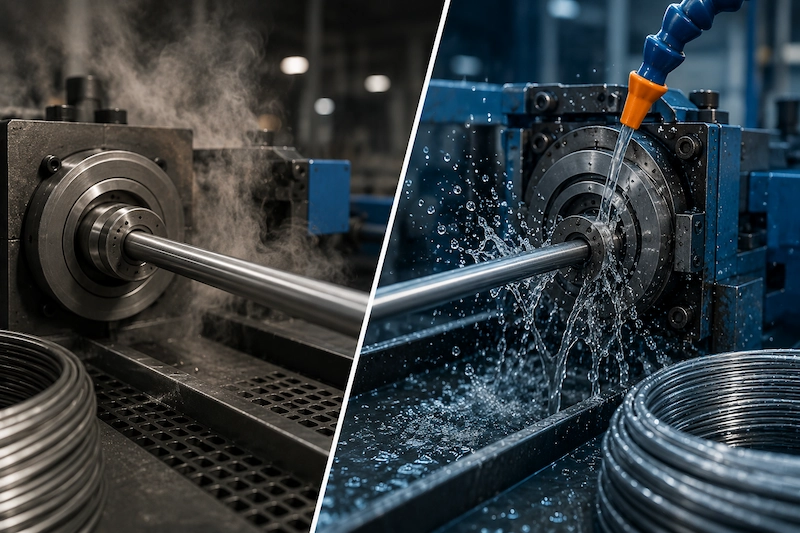
Use Surface Grinders, Not Angle Grinders: Never let an operator take a hand-held angle grinder to a cutting blade. It creates uneven edges. Always use a precision precision surface grinding machine with a coolant system.
Monitor the Heat (Crucial): High-tensile blades lose their temper (hardness) if they overheat during grinding. If the metal turns blue or brown during sharpening, its internal structure is ruined, and it will chip immediately upon returning to the machine. Flood the grinding area with coolant.
Maintain the Exact Bevel Angle: Check the OEM specifications for the blade's bevel angle. Altering this angle by even 2 degrees will cause the blade to either fail to cut the 3.0mm wire or chip under the extreme pressure.
The most effective way to lower your consumable costs when running Galfan wire is to start with the right steel.
AtCandid Equipments, our heavy-duty mesh cutting machines are equipped with premium Cr12MoV or Tungsten-Carbide inserted blades specifically engineered for high-tensile and Galfan wire. Our optimized cutting geometries reduce shear stress, extending the time between rotations by up to 50% compared to standard industrial blades.
Don't let consumable costs eat into your profit margins. Invest in cutting systems designed for the toughest materials on the market.
 English