In civil engineering—whether for riverbank protection, slope stabilization, or massive retaining walls—the integrity of the structure relies entirely on the quality of the gabion mesh. And the quality of the mesh is dictated by one thing: the Gabion Mesh Machine that produces it.
For procurement managers and factory owners, choosing between a "Standard" model and a "Heavy-Duty" model is not just about budget; it's about capability. Buying an under-powered machine for a high-spec project leads to frequent breakdowns, inconsistent mesh geometry, and ultimately, rejected product batches.
This guide breaks down the technical differences to help you align your machinery investment with your project demands.
Before looking at the machine, look at the contract specifications. The defining factor in choosing a gabion machine is the raw material.
The gabion box manufacturing process involves twisting high-tensile galvanized or PVC-coated wire into a hexagonal pattern. The thicker and harder the wire, the exponentially more force is required to twist it without breaking the machine's components.
Standard Requirement: Often involves wires around 2.0mm to 2.7mm with standard tensile strength.
Heavy-Duty Requirement: Often demands 3.0mm, 4.0mm, or even thicker wires with high tensile strength for critical infrastructure projects.
Pro Tip: A machine rated for 4.0mm low-carbon wire may fail when running 3.5mm high-tensile wire. Always specify wire tensile strength when consulting with manufacturers to demonstrate your technical E-E-A-T.
Standard machines are designed for speed and efficiency within a specific range. They are excellent workhorses for the right applications.
Ideal Applications: Light soil erosion control, residential landscaping gabions, and smaller-scale architectural projects.
Technical Characteristics:
Lighter Frame: Built for lower torque operations.
Higher Speed (on thin wires): Can achieve impressive output rates when running thinner gauges (e.g., 2.2mm).
Cost-Effective: Lower initial capital investment.
The Limitation: If you push high-tensile, heavy-gauge wire through a standard machine, you risk damaging the main shaft and twisting gears.
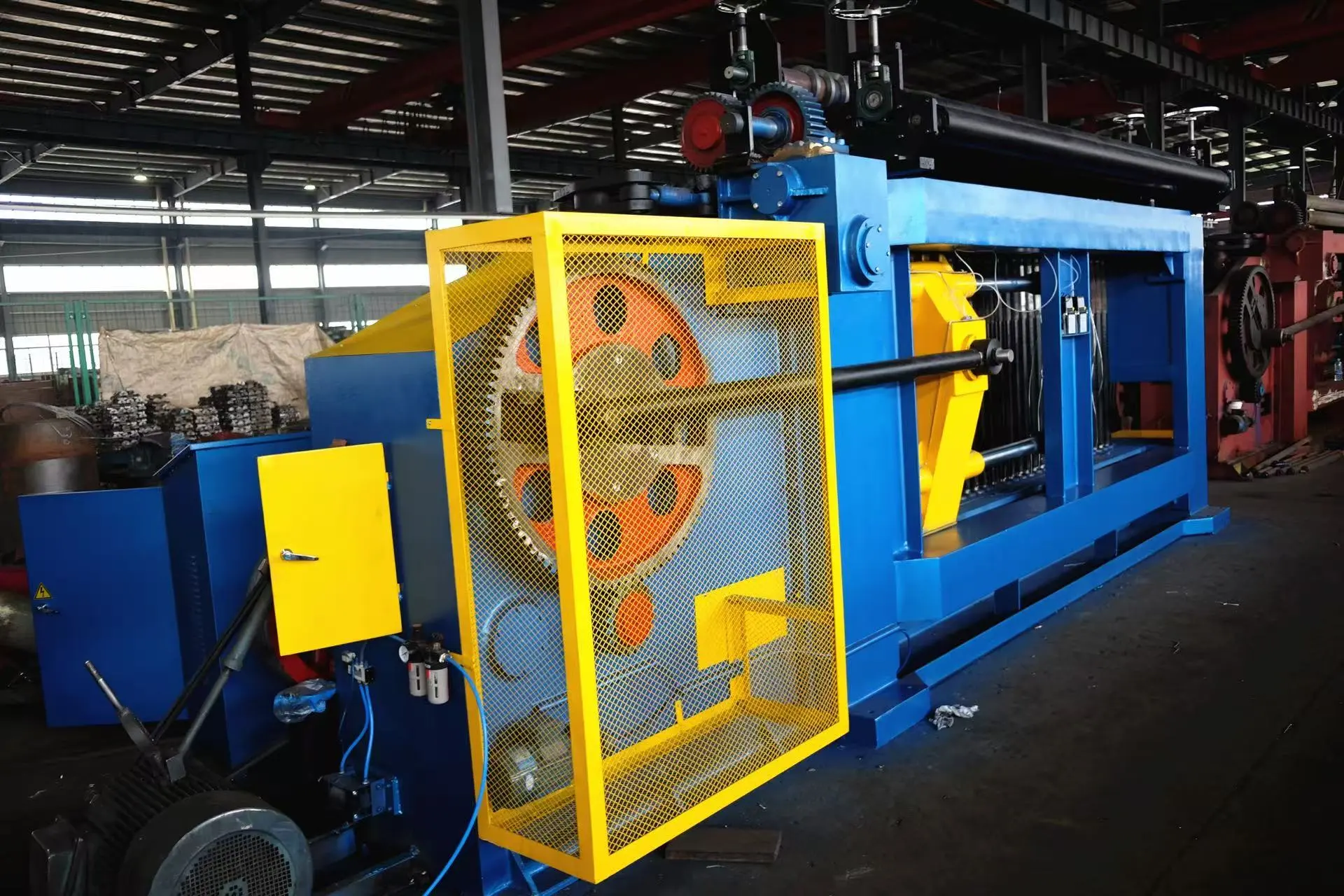
A heavy-duty gabion machine is an industrial beast engineered for abuse. It is designed to handle the high torque required to twist thick, stiff wires continuously.
Ideal Applications: Large-scale river training works, coastal defense structures, massive highway retaining walls, and projects requiring large mesh openings (e.g., 100x120mm or larger) with thick wire.
Technical Characteristics:
Reinforced Structure: Heavier cast steel components and a robust bed to absorb vibration and resist torque.
High-Power Drive System: upgraded motors and gearboxes specifically designed for high-load twisting.
Durability: Designed for 24/7 operation under maximum load conditions.
Product Spotlight: Our machines are engineered with reinforced main shafts to handle the toughest global project specs. See the robust build quality on our Gabion Machine Product Page.
| Feature | Standard Machine | Heavy-Duty Machine |
| Typical Wire Max (Galvanized) | Up to ~2.7mm - 3.0mm | 3.2mm - 4.0mm+ |
| Machine Frame Weight | Lighter | Heavy/Reinforced |
| Primary Focus | Speed on thin wire | Torque on thick wire |
| Best Application | Landscaping, Light Erosion | Major Civil Engineering, Dams, Highways |
| Investment Level | Moderate | Higher (Long-term asset) |
Note: Specifications can vary based on customization. Always verify with technical data sheets.
When bidding for international engineering projects, versatility is key.
While a standard machine costs less initially, a heavy-duty machine offers the flexibility to accept a wider range of contracts—from simple landscaping jobs to massive government infrastructure projects. In the long run, the ability to say "Yes" to high-margin, heavy-spec contracts makes the heavy-duty machine the superior investment for serious manufacturers.
Don't risk project rejection with under-specced equipment.
Contact our engineering team today for a technical consultation. Let us help you configure the exact machine to match your upcoming project requirements.
 English