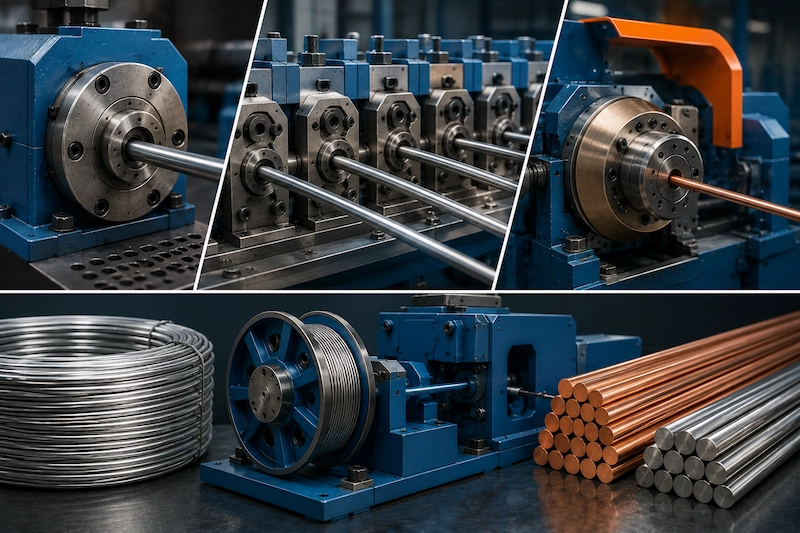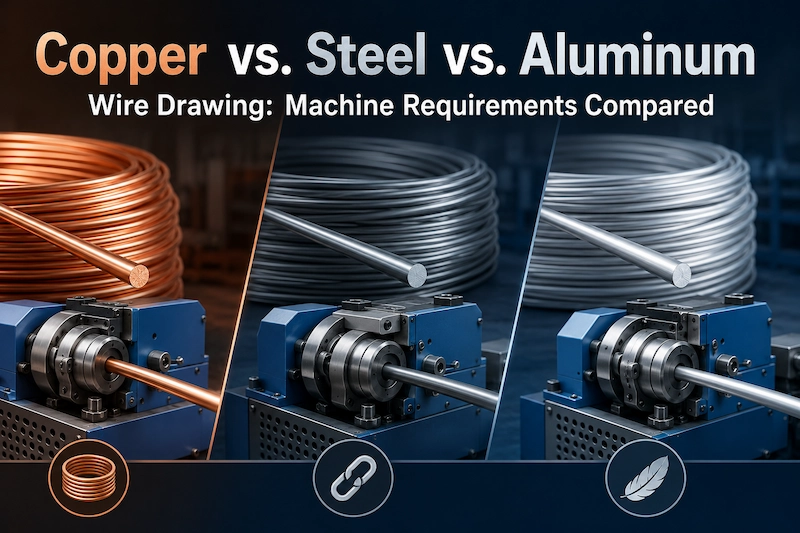
Choosing the right Wire Drawing Machine is not only about output speed or automation level—it also depends heavily on the material you plan to process. Copper, steel, and aluminum wire behave very differently during drawing, which means machine design, lubrication, die materials, cooling systems, and production settings must be carefully matched.
In general, steel wire drawing requires higher machine strength and wear resistance, copper wire drawing prioritizes precision and conductivity preservation, while aluminum wire drawing focuses on surface protection and lightweight material handling.
Using the wrong machine configuration for a specific metal often leads to excessive die wear, wire breakage, inconsistent diameter, surface defects, or unnecessary maintenance costs. Understanding the differences before investing can improve long-term production efficiency and equipment ROI.
Although the wire drawing process looks similar across materials, the physical characteristics of copper, steel, and aluminum vary significantly.
Key material differences include:
Hardness
Tensile strength
Heat generation
Surface sensitivity
Lubrication requirements
Drawing speed tolerance
These differences directly affect:
Machine structure
Motor power
Drawing die materials
Cooling systems
Lubrication methods
Maintenance frequency
A machine optimized for steel wire may perform poorly when processing aluminum or copper.
| Factor | Steel Wire | Copper Wire | Aluminum Wire |
Material Hardness | High | Medium | Low |
Drawing Difficulty | High | Medium | Low |
Required Machine Strength | High | Medium | Low |
Surface Sensitivity | Moderate | High | Very High |
Typical Drawing Speed | Medium | High | High |
Lubrication Need | Heavy-duty | Precision lubrication | Gentle lubrication |
Die Wear | High | Medium | Low |
Cooling Demand | High | Medium | Medium |
Common Machine Type | Dry & straight-line | Wet drawing | Wet or lightweight systems |
Steel is the most demanding material in terms of machine durability.
High tensile strength and hardness create significant friction during drawing, especially for carbon steel and galvanized wire applications.
Typical products include:
Nail wire
Wire mesh
Spring wire
Prestressed wire
Steel rope wire
Galvanized steel wire
Steel wire production often uses:
Dry wire drawing machines
Straight-line wire drawing machines
Multi-die systems
Inverted vertical machines
These machines are designed to handle:
Higher pulling force
Increased die wear
Greater heat generation
Large wire diameters
Steel drawing creates higher mechanical stress.
Machines generally require:
Reinforced steel frames
High-load gearboxes
Durable capstans
Heavy-duty motors
A lightweight machine structure may vibrate excessively under continuous steel production.
Steel quickly wears down low-grade dies.
Common die materials include:
Tungsten carbide dies
Polycrystalline diamond (PCD) dies
Synthetic diamond dies for precision wire
The wrong die choice significantly increases consumable costs.
Because steel generates substantial friction heat, cooling becomes essential.
Most factories rely on:
Dry powder lubrication
Soap-based lubricants
Forced cooling systems
Without proper cooling, wire breakage and surface defects become more frequent.
Copper wire drawing focuses heavily on maintaining electrical conductivity and surface quality.
Even small surface defects can reduce product performance in electrical applications.
Typical products include:
Electrical wire
Communication cable wire
Magnet wire
Electronic conductors
Cable cores
Copper processing commonly uses:
Wet wire drawing machines
Fine wire drawing systems
Multi-die high-speed machines
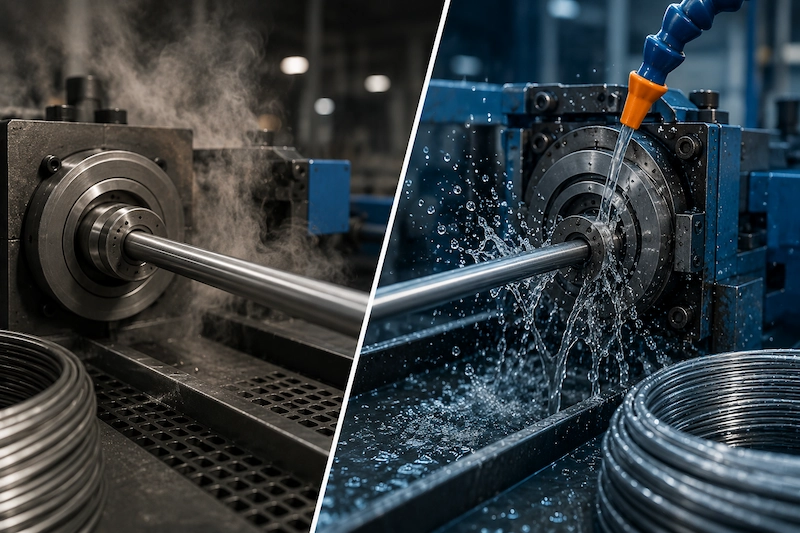
Wet drawing is often preferred because it minimizes friction and protects surface quality.
Copper is softer than steel but sensitive to stretching inconsistency.
Unstable tension may cause:
Diameter variation
Surface scratches
Conductivity loss
Product defects
Precision tension control improves consistency.
Copper contamination can impact conductivity performance.
Factories often prioritize:
High-quality emulsions
Filtration systems
Cleaner production environments
Machine cleanliness becomes more important than raw mechanical strength.
Copper wire drawing frequently runs at higher speeds than steel due to lower drawing resistance.
This improves productivity but increases the importance of cooling efficiency.
Aluminum is softer and lighter than steel or copper, but its surface is more vulnerable to damage.
Typical products include:
Electrical conductor wire
Automotive cable
Lightweight industrial wire
Aerospace wiring
Aluminum wire production typically uses:
Wet drawing systems
Fine wire drawing machines
Lightweight high-speed lines
Because aluminum is soft, lower drawing force is required.
Aluminum scratches easily.
Poor machine setup may result in:
Surface marks
Oxidation issues
Poor coating adhesion
Quality rejection
Smooth capstans and optimized dies help reduce defects.
Unlike steel, aluminum does not require heavy-duty pulling systems.
This often allows:
Lower energy consumption
Faster production speeds
Reduced machine wear
Aluminum reacts quickly with environmental conditions.
Factories often integrate:
Controlled lubrication
Stable cooling systems
Surface treatment compatibility
The answer depends on production goals.
Higher machine cost is usually unavoidable.
However:
Better durability
Longer service life
Reduced breakdown risk
often justify the investment.
Precision equipment tends to provide better ROI through:
Reduced defects
Better conductivity consistency
Higher product value
Lower material resistance may reduce:
Energy consumption
Tool wear
Maintenance expenses
But surface quality control remains essential.
| Material | Recommended Drawing Method |
|---|---|
| Steel | Dry drawing (most common) |
| Copper | Wet drawing |
| Aluminum | Wet drawing |
Dry systems are durable and suitable for:
Large diameters
High-strength wire
Nail manufacturing
Construction wire
Liquid lubrication improves:
Surface finish
Heat control
Drawing precision
Product consistency
Especially for electrical applications, wet drawing generally delivers superior quality.
Before purchasing equipment, factory owners should evaluate several practical questions.
Machines optimized for steel may not deliver ideal results for aluminum or copper.
Mixed production often requires customized configurations.
Fine wire production generally benefits from:
Wet systems
Precision motors
Better tension control
Heavy wire production usually requires:
Stronger frames
High-torque motors
Durable dies
Large-scale operations often justify:
Multi-die systems
Straight-line automation
Higher-capacity motors
Small factories may prefer simpler systems with lower investment risk.
If your products serve electrical or precision industries, machine accuracy matters more than maximum speed.
Material type should always be one of the first considerations when selecting a Wire Drawing Machine.
Choose Steel-Oriented Machines If:
You produce nails, mesh, or construction wire.
Heavy-duty durability matters.
Large-diameter wire is common.
Choose Copper-Oriented Machines If:
Conductivity consistency is critical.
You manufacture electrical wire.
Surface quality standards are strict.
Choose Aluminum-Oriented Machines If:
Lightweight production is required.
Surface protection is essential.
Energy efficiency matters.
Factories that align machine specifications with material characteristics generally experience lower maintenance costs, higher product quality, and stronger long-term profitability.
Some machines can handle multiple materials, but configuration changes—including dies, lubrication, speed, and tension settings—are usually required for optimal performance.
Steel has higher hardness and tensile strength, creating greater friction and die wear during processing.
In many cases, yes. Wet drawing improves cooling, surface finish, and conductivity consistency.
Generally yes. Aluminum is softer and lighter, reducing pulling force requirements.
Customized multi-material systems with adjustable tension and interchangeable dies are often the best solution for factories processing different wire materials.
 English